Molly: Divorced Romance
"I can't believe these seasons finished the same way," I half-joked to my husband as the credits rolled on season 3 of The Diplomat, an extremely stupid show. The other "these" was season 2 of AMC's Interview with the Vampire, an extremely good show. Paul, who tolerates a lot of vampire talk and has a lot of exceptions for a self-professed vampire hater, did not watch IWTV with me but he lets me show him clips (this is also true for Sex & The City). The "same way" is a very spiritually divorced couple reconciling. In the case of the vampires Lestat and Louis, a century of grievances is hugged out. In the case of the diplomat Kate Wyler, she runs back to her marriage in an epiphany that nobody will ever excite her or understand her as well as her maddening husband. (and then there's a big twist that jeopardizes it in the last 60 seconds because season 4 has already been announced)
I think in contemporary stories as well as real life social dynamics, the couple that's always zigzagging and breaking up and getting back together is seen as tiresome. Often they are. But I have a tremendous fondness for stories about couples who work it out after problems and betrayals that would shatter most connections forever, even if it takes decades - or centuries! My husband and I are both divorced, and our first marriages ended before either of us were 30. To compress the legend, we met at work in New York and there was an instant spark. I don't know if I believe in love at first sight but it's impossible not to project that a little bit onto our first meeting, writing this close to a decade later. Our office was full of supportive and liberal people who would never shame anyone about divorce, but as the only actual divorcees around, we were able to bond over some thorny feelings. I love that our marriage is a re-marriage for us both; that we made that choice already having the knowledge of how this choice can go wrong. If we ever made the idiotic and infinitesimally unlikely decision to divorce each other we would just end up re-married or kind of ambiguously together in a way that would be annoying for all our friends and family.
One of my favorite shows ever is The Affair, at least two seasons of which were quite bad. When it was good, it was transcendent, though. Over six seasons of cheating and grueling yelling matches between every combination of characters, the reprobate Noah Solloway ended up back with his wife, Helen. They atoned for their sins against each other and took the huge risk of trying again. Helen was not a character I especially liked or related to while watching, and I was not expecting the show's tremendously romantic and optimistic ending. My favorite character was Ruth Wilson's doomed and misunderstood Alison, but it was Helen who made the case beautifully for taking Noah back. Depriving him of her affection may have been a just punishment, and staying away would certainly be the more dignified choice, but what's the point if it leaves you with self-respect but no love and companionship?
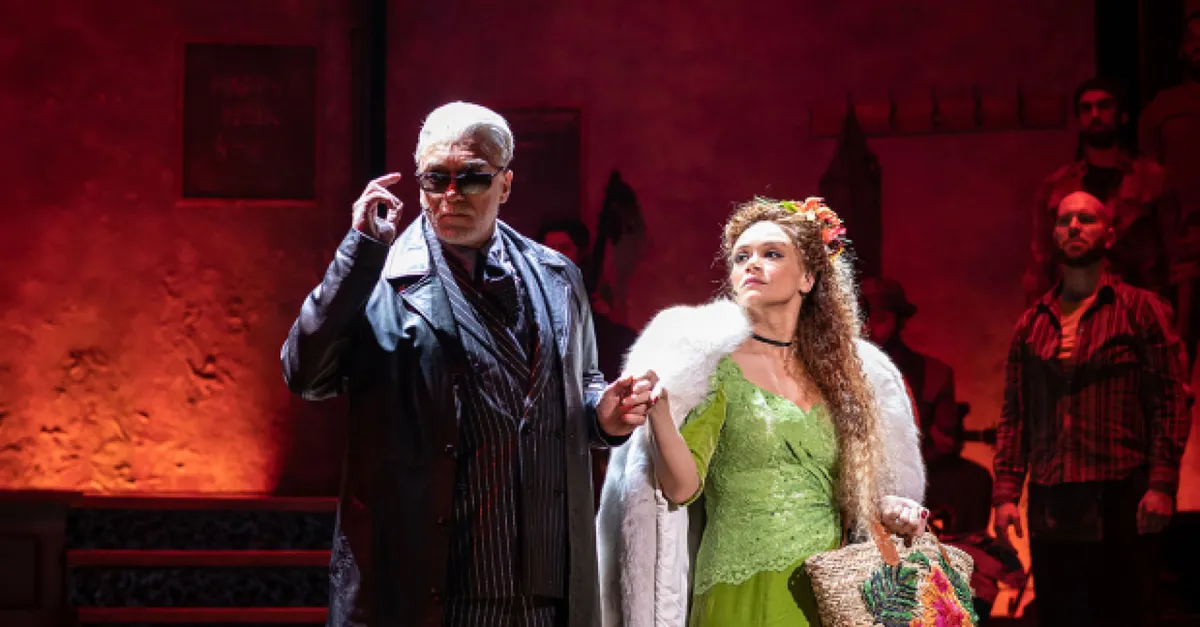
Then there's Hades and Persephone. I often think that girls who were kind of turned on by them in their middle school mythology units paved the way for Zutaras and Reylos. The actual myth has plenty of breaking up and getting back together built into the logistics of the arrangement, but Hadestown is the canonical divorced Hades and Persephone. In the musical, Hades is a wickedly charming captain of industry with a hypnotic low bass and Persephone, is a slinky, depressario party girl. This version of the couple has been at it for a long, long time, and the snippet of the relationship the musical portrays finds them in a cold war. They have chemistry and know the other's moods and mannerisms like even the most bitter couples still in love do. Theirs is a hard conflict to reconcile: can the human flourishing, renewal, and freedom Persephone represents and champions ever be in harmony with Hades' bellowing, claustrophobic underworld? As you probably know, things don't work out for Orpheus and Eurydice, though it is the foremost example of a story you keep showing up for in hopes that it will be different, this time. Orpheus' unprecedented efforts to save his wife cause the tension between the older couple to boil over, triggering what are clearly long held resentments and clashes in worldview:
[HADES] You and your pity don't fit in my bed
You just burn like a fire in the pit of my bed
And I turn like a bird on a spit in my bed
How long? How long? How long?
[PERSEPHONE] How long? Just as long as I am your wife
It's true the earth must die
But then the earth comes back to life
And the sun must go on rising
In Hadestown, the struggle and tragedy of Orpheus and Eurydice do soften Hades enough to give his wife's love more of a foothold. When they speak "think they'll make it?" and "think they'll try" to each other, they are of course, talking about themselves.
Paul got to see the musical in its pre-broadway iteration and got obsessed with it, playing the soundtrack for me the first time he got to drive me around in a car. For one of our first Christmases, he got us tickets to the Broadway show in its earliest days. And then! We had a stupid separation that in hindsight didn't last that long but we sure made ourselves and the people around us miserable with it. The date of our tickets was like...a week and a half before we were Officially Back Together.
And Hades and Persephone They took each other's hands And brother, you know what they did? They danced
Weeping at Hades and Persephone dancing and agreeing to try again when we were in the middle of doing the same thing was one of those high octane emotional experiences that was very rough but I wouldn't trade for anything now.
I don't know how many seasons Interview with the Vampire is going to get in the long run but it won't be enough to cover all of the books. I also know, in my heart of hearts, that I will never finish all of the books. So I skimmed what happens at the end and, among many many other things, it seems like Rice ended it all as a LouStat. The two seasons of AMC's adaptation have already provided a lot of material honoring Lestat and Louis as the most divorced couple of all time. The season 2 finale has them clearing the air and sharing a heavens-shaking embrace of shared trauma and apology. They aren't back together, but they still love each other. This is very different from the season 1 finale, where Louis and his daughter/sister Claudia execute an elaborate plot to kill Lestat, though Louis can't bring himself to ensure he's dead. Louis spends half of season 2 having mind conversations with his toxic ex boyfriend even while falling deep into a new relationship with the vampire Armand. He even believes for decades that Lestat would have let him die! It comes out in a flashback from the 70s that LouStat's incendiary relationship and the significance it holds for Louis is still a sore spot, even after he has been with Armand for as long or more.
Interview with a Vampire, books and show both, are actually not unlike The Affair. One of the latter's main tricks was to show the same events from different perspectives, mostly with Noah and the other side of the titular affair, Alison, but the show kept adding and adding POVs as it went on. When it was good it was masterful, and sometimes it got overstuffed and/or "she's wearing a different outfit in this version!!" got stale. The novel IWTV is Louis' perspective on his very rough relationship with Lestat, and if you stop there the takeaway is that he's pretty monstrous.* Lestat crashes into The Vampire Lestat with an attitude of "that's cute, but not how I remember it XOXO."
Vampire stories are an excellent framework to examine the divorced romance for a number of reasons. Our mortal love lives are restricted by time and the unbearable lightness of being. If you waste too many years on a doomed romance or offer grace and forgiveness that comes back to bite you, you have used up a lot of your one wild and precious life. Vampires, on the other hand, have centuries to take big swings, even if some of them are misses. Sometimes I think the best vampire love stories speak to something inescapable about mortal love: how difficult it is to find someone who really sees you. In life and in Anne Rice novels, it's rare to be truly compatible with someone. 5, 50, or 500 years with the love of your life won't feel like enough, so don't let your pride get in the way.
*in a normal way...obviously all of these characters are monsters...watching the discourse about where exactly the line is for domestic violence among vampires is something
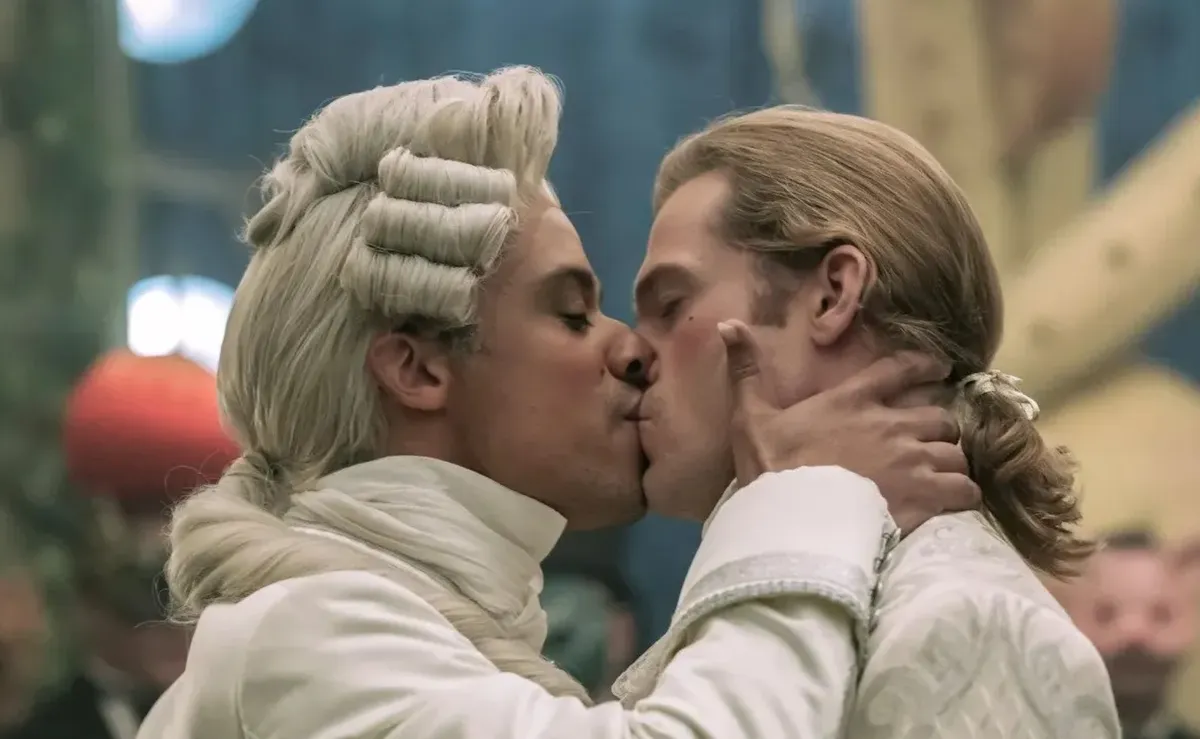
The Diplomat is one of a handful of shows that both my household and my parents' enjoy. It is so, so dumb, but has just enough in there about marriage and compromise, and enough great performances, to keep it compelling. I suggested we watch it not because I am comforted by its alternate reality in the long 2014 of liberal optimism and consensus reality, but because I love Keri Russell. Felicity is a classic and J.J. Abrams' best work. But The Americans is one of my favorite shows of all time...maybe my favorite live action show of all time. It is the best show about marriage of all time, certainly, and Russell's micro-facial-muscle acting as Elizabeth Jennings is a virtuosic performance. I will show up for her.
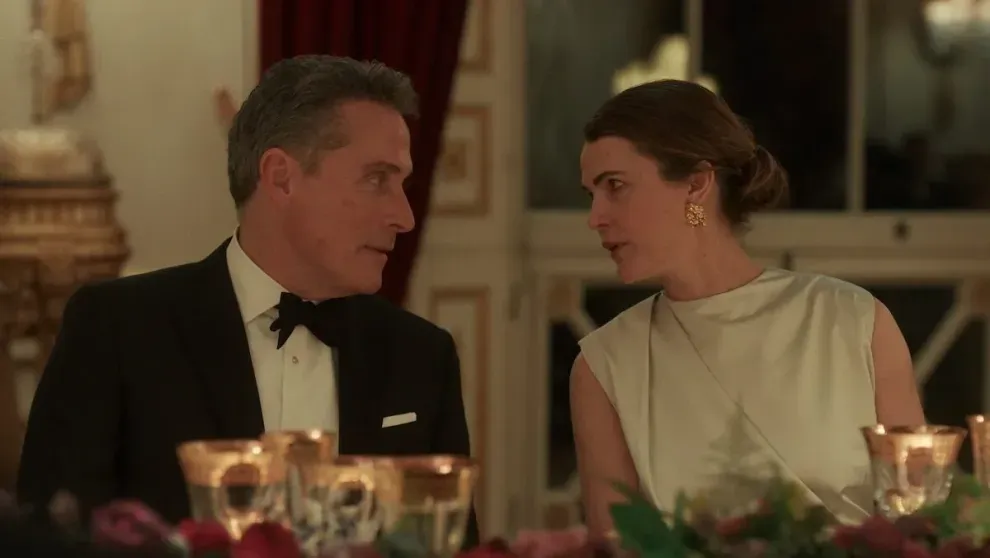
In The Diplomat, Russell plays Kate Wyler, a nose-to-grindstone hyper competent career diplomat whose marriage to Hal (Rufus Sewell), a former ambassador in the Middle East, is ambiguous and rocky. Kate is appointed to the normally ceremonial position of Ambassador to the Court of St. James amid a geopolitical crisis. The Wylers struggle to define their place as individual authorities, especially Kate. They vie for power with each other but also have brilliant moments of strategy as a team. They are attracted to each other, he's hopelessly in love with her, and she doesn't know what she wants (plus intense chemistry with the UK Foreign Secretary). 3-5 bonkers things happen every single episode but the main thing is that no matter how mad she gets about her husband's wildcard moves and unpredictable personality, she is never more thrilled than when she's working with him. She's a sexy woman and the show makes her kind of a Mary Sue in that most of the male characters are taken with her in some way, but it's clear that nobody will do it for her like her husband.
It's always a bit of a let down to see Keri Russell and a handsome, charismatic actor portray a hot, tense, and complicated marriage because nothing will be The Americans and nobody will be Matthew Rhys. Their secret, real wedding! Phillip learning that even though his wife took years to warm up to him romantically and sexually, she rejected the first man proposed for her as a mission partner! The tooh pulling! The Americans started with the Jennings' marriage in a more "for show" phase and ended with them both back in the USSR, doing a version of something I'm always a sucker for: talking about how they might have met had they not been put together in wildly unusual circumstances. Sometimes I think "Maybe we would have met...on a bus..." just to myself. After the show's masterful series finale, I was surprised to see how many fellow fans read it more cynically than I did. To me, it made a case again and again for not "making the easy mistake of letting go" as Depeche Mode says.
Where the ridiculous Diplomat earned a tiny piece of heart was in the season 3 finale. Kate and Hal are fighting, again: about their marriage, Kate's "arrangement" with Callum, an MI6 agent, and how both of those are now wrapped up in another far-fetched balancing act to avoid upsetting the nuclear scales of the world's powers. In the middle of the argument this happens:
I think the moment he told you, you were so moved by his noble sacrifice that you dropped to your knees in front of his resplendent, gallows-bound cock.
You know what?
What?
What?!
Sorry.
Gallows-bound cock is just…
[chuckles] It’s funny.
Throughout the season, The Wylers show that they have more chemistry fighting about Kate's boyfriend than Kate actually has with her boyfriend. The one argument Kate and Callum have is short, serious, and dour. It's not just that every season has shown Kate making the case for her husband as an irreplaceable political mind even as she complains about him, or that earlier in season 3 we got a flashback of their early relationship and his proposal. The moment above fully sold me on them as a couple who needs to stay together forever both for their own good and to protect everyone else. The only thing that can destroy a couple who can make each other laugh while fighting is themselves. Ask me how I know!
❤️🛸🎸 Bonus Paul Paragraphs:
When Molly told me she was writing a post about fictional couples with passionately-divorced energy, I stared into middle distance for ten seconds before Max and Milia Jenius from the Macross anime series came rocketing to mind.
Max and Milia are secondary characters in the original Super Dimensional Fortress Macross series. They're each the undisputed ace pilot of their respective races (human and meltran), and their love story is practically shakespearean.
Their first face-to-face meeting comes when Milia poses as a human to infiltrate the Macross city-ship and encounters Max at a video game arcade. She's easily bested all comers in a space combat game until Max comes along and narrowly defeats her, at which point she realizes he must be the ace pilot she's encountered in battle. Max, however, is too enchanted by her beauty to come to the same conclusion about her. Afterwards, Milia assaults Max in a nearby park and attempts to kill him with a knife, but Max manages to disarm her and—god he's so cool—immediately kisses her.
This being Macross, love wins out. They become the first inter-species couple between their warring peoples.
Their youngest daughter (of seven), Mylene, is a major character in a sequel series, Macross 7, and we see a Max and Milia who have become very different people in middle age. Milia is the civilian leader of the city-ship the series follows, and Max the fleet admiral of its military, and—alas and alack—it becomes quickly apparent that they are not on good terms. They're snippy and frosty with each other, and frequently clash over administrative and tactical matters. It is therefore an enormously rewarding payoff when during the final climactic battle, they end up climbing into color-matched VF-22 Sturmvogels to join the fight. It feels like an older couple at a wedding reception getting dragged out onto the dance floor only to discover that they still have the stuff. It's so, so good.