Paul: Opuses Magnum
One of my all-time favorite video games is Opus Magnum.
It’s a puzzle game about building building molecule-like shapes from atoms or smaller molecules. Each level gives the player some set of precursor atoms, which need to be bonded or split or transformed such that they form the solution molecule. But you don’t get to manipulate the atoms directly. Instead, you build a sort of abstract clockwork machine that processes the input atoms into the solution molecule, and the puzzle is only solved when your machine can make the required shape not just once but repeatedly.
For a given puzzle (”Except the production alchemy puzzles” yes yes I know), you can use as many of the clockwork components as you like, give them as lengthy a movement program as you like, and take up as much space on the gameboard as you like. As long as it eventually produces the required shape, it counts as a solution.
When you complete a solution, the game gives you some information about it—its total cost (you can use as many components as you like, but each one has a “price), how much gameboard area it occupies, and how many cycles it takes to produce the required output. It also—diabolically—shows a histogram of where your solution falls in the distribution of solutions for that puzzle produced by all Opus Magnum players, ever.
What this means is that once you solve a puzzle for the first time, you’re immediately given feedback about the various ways in which your solution might be improved.
The main “campaign” puzzles of Opus Magnum can probably be finished in 10 or 15 hours if you wanted to just rip straight through the game. If you’re like me, though, that histogram after a solution will immediately make you want to take another crack at the puzzle you just solved.
Here’s my journey through “Hangover Cure,” a puzzle from the first, easiest chapter of the main Opus Magnum story.
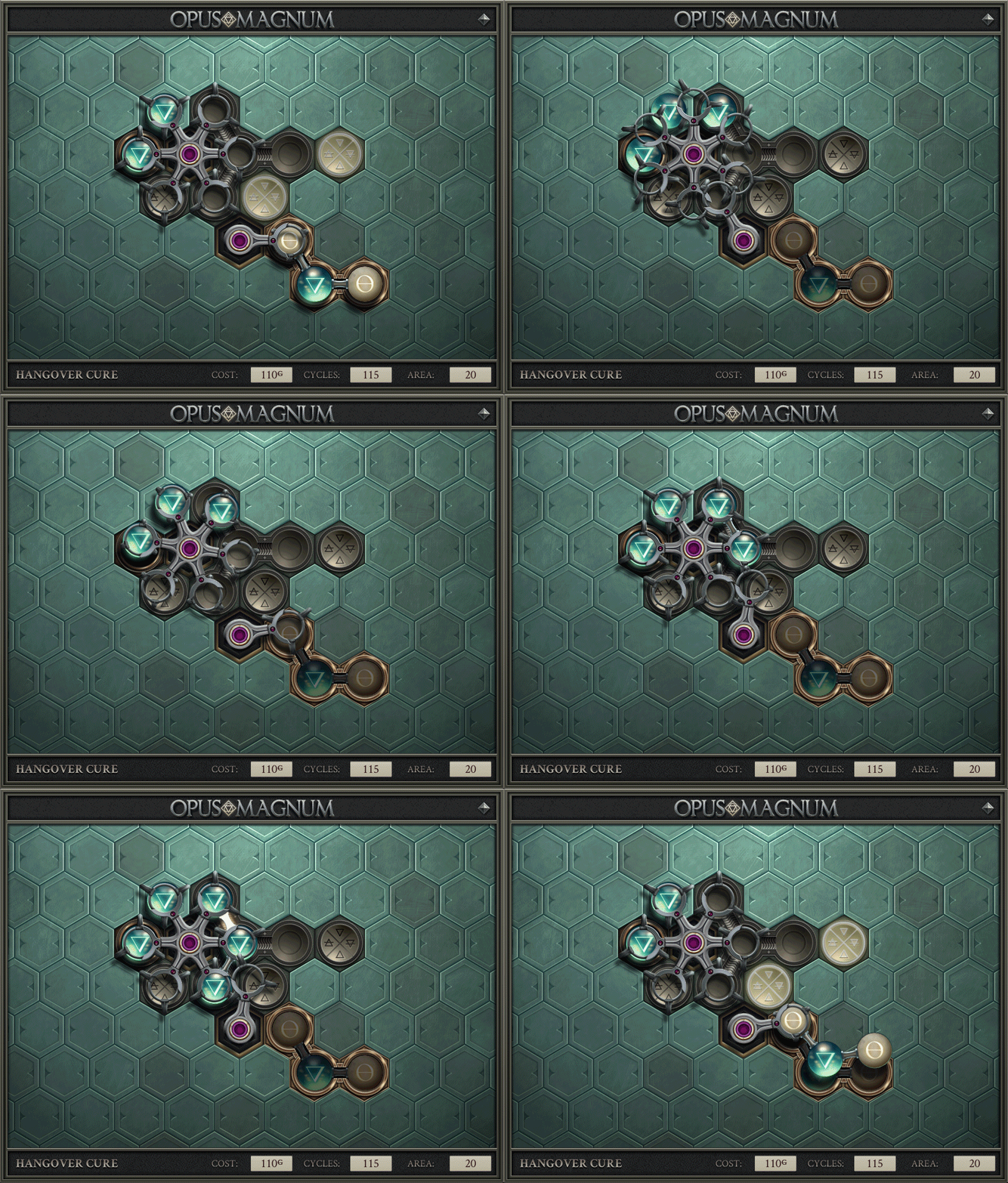
This was my first solution, entitled “First Attempt.” It’s mediocre in every way, being (it turns out) quite slow in addition to not especially thrifty or compact. I do think the ratcheting back-and-forth action of the wheel is quite pleasing to watch, though.
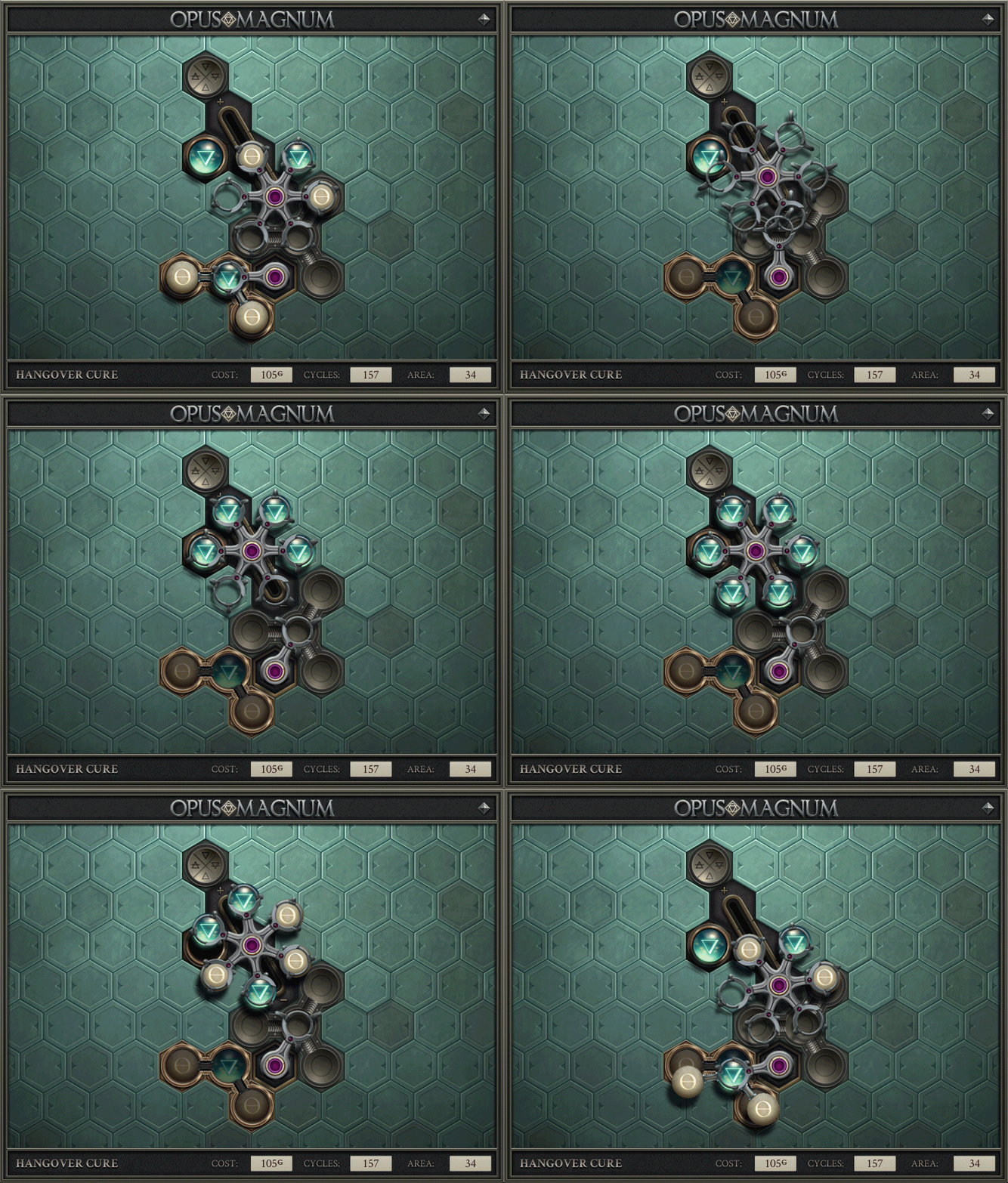
My second solution has the filename “Worse In Every Way”. That’s not strictly true—it’s marginally cheaper, using only one transformation glyph instead of two. But it’s even slower and even larger than its predecessor. And yet—there’s something satisfying of watching the wheel get completely filled up, then rotate to allow two fully completed instances of the solution molecule to get laboriously plucked off each side.
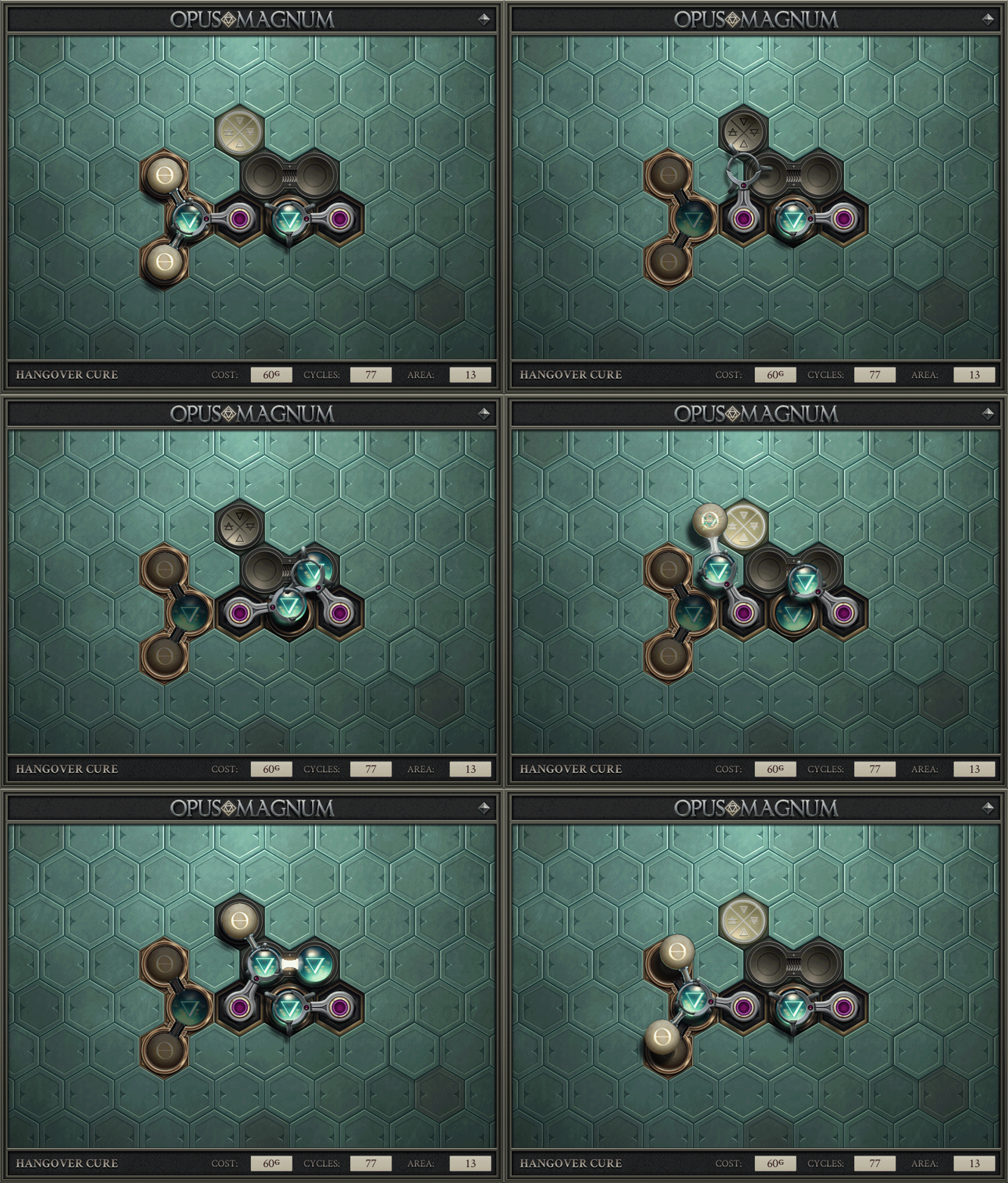
This one is called “Smaller, Faster, Cheaper” and it is indeed all three of those things. You can see me starting to get the hang of things here—it’s the first of these solutions to involve revolving a piece in the arm’s grip in addition to rotating the arm.
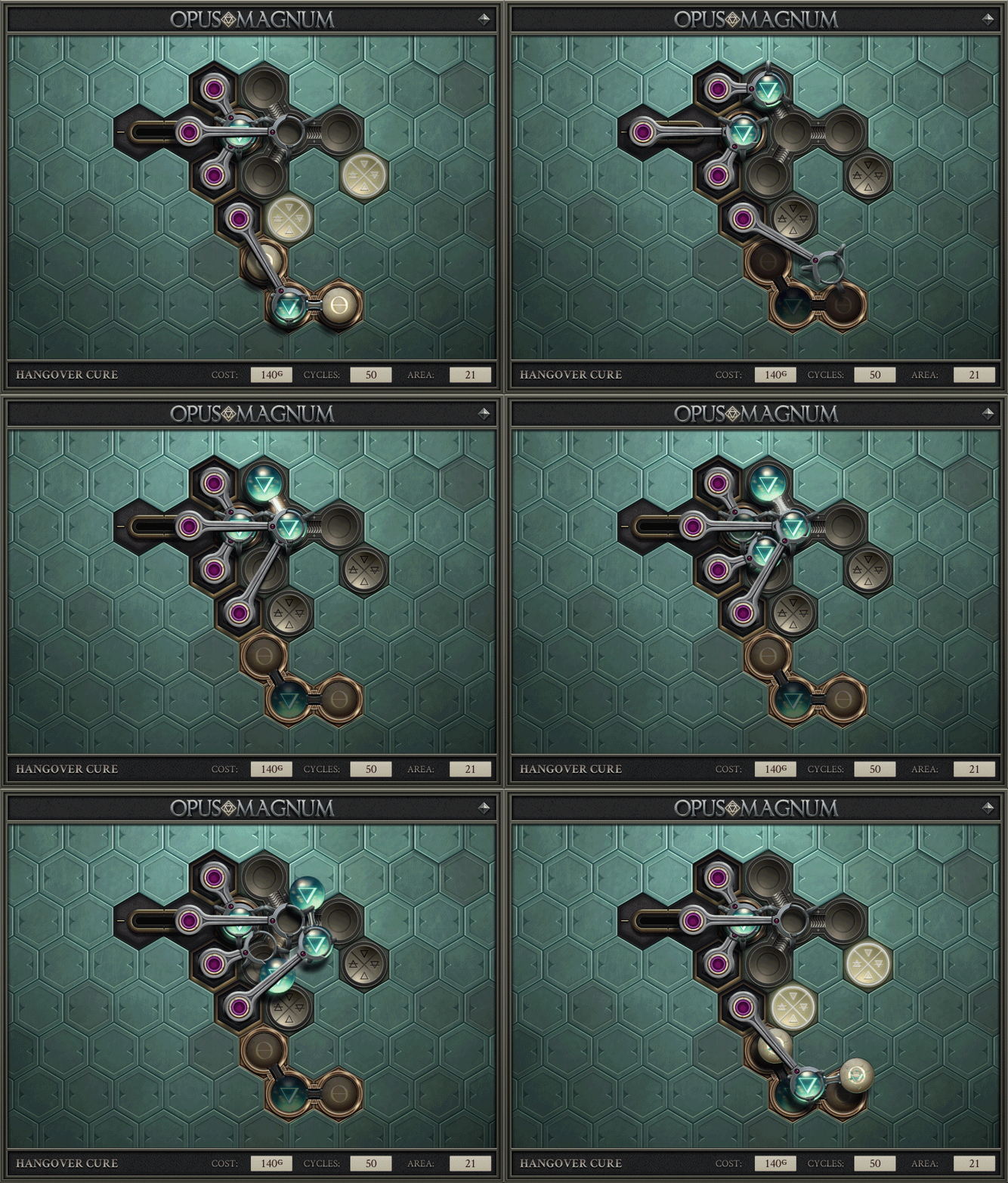
This one’s named “Fastest Possible?”, since on the histogram it appeared near enough to the edge that it seemed like it was roughly in line with the fastest solutions among the player base. However, I’m a better Opus Magnum player now than I was when I finished this solution, and I can tell just by looking that it’s not the fastest possible solution…
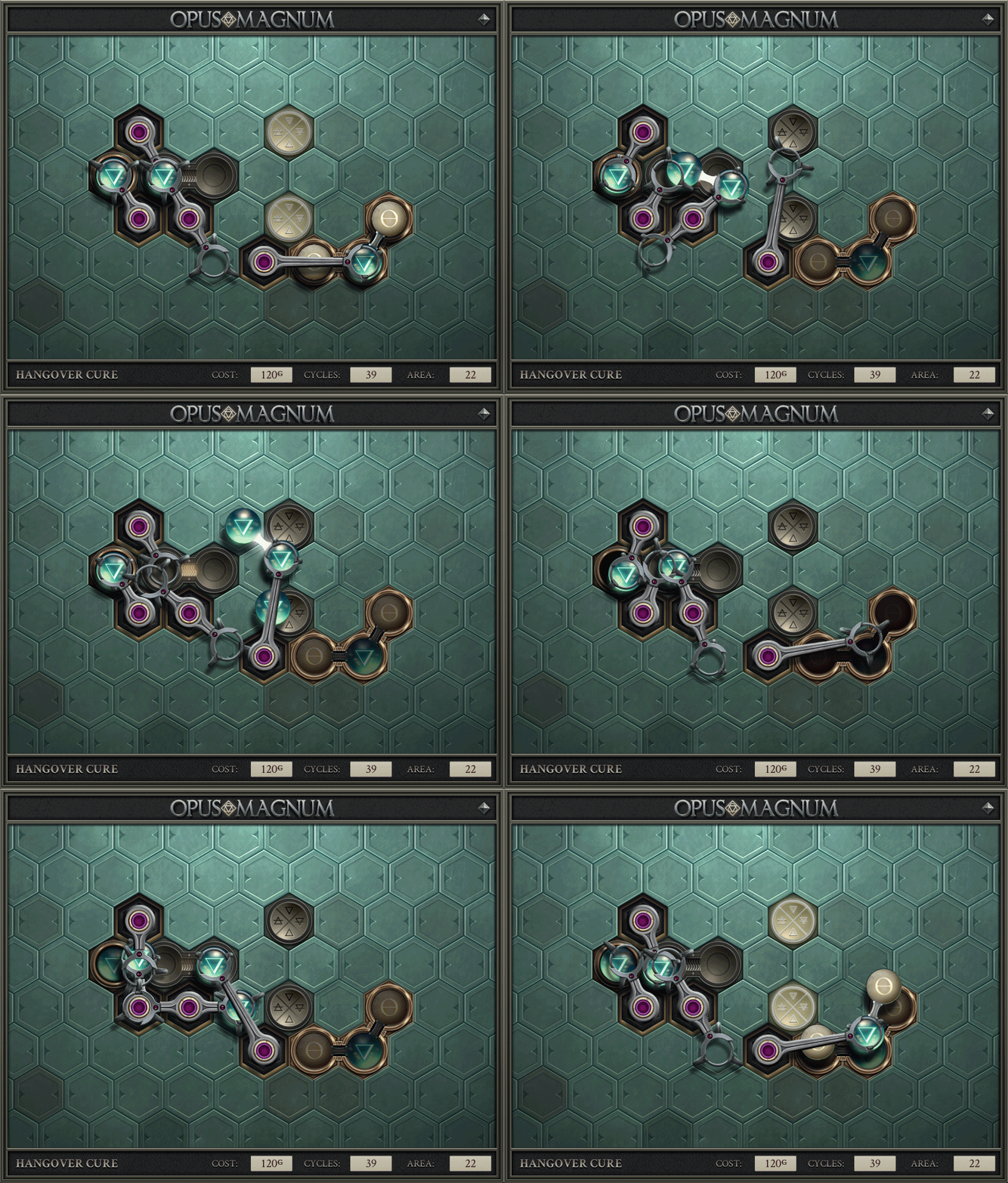
…because the fastest possible solution would by definition involve taking atoms from the source tile as fast as they can be taken, i.e. with two alternating arms moving successive atoms out in a rapid back-and-forth motion. I think this solution, entitled “Full Throughput”, is the fastest one possible. I don’t think it’s possible to transform the end-atoms any earlier or quicker, and that’s the only place left to optimize.
I’m out of time for this blog post so here’s a quick list of things I find engaging about Opus Magnum:
- Returning to a puzzle without looking at my previous solutions and seeing how differently I solve it now than I did a year or four years ago.
- The obvious but difficult-to-articulate quality of “beauty” in certain solutions.
- The vocabulary of sub-mechanisms and general approaches you build up over the course of playing the game
- The underappreciated story of the main campaign
- The unbelievably high skill ceiling present in the enthusiast community
- The gifs, just generally