Molly: Inside You There Are Two Middle Aged, Widowed Crime Novel Protagonists
I was going to call this "inside you there are two middle aged detectives" but, critically, one of these men is John Banville's Quirke. Quirke is not a detective, but a pathologist and a man in the grand crime tradition of "guy who gets to come along...for some reason." In my experience reading period crime fiction from the UK and Ireland, people are always blithely obstructing justice* so nobody really presses as to whether it's illegal for Quirke to be there or not.
*someone with an inside view of the British class system please tell me if your upper class is uniquely perverted and entitled because that vibe keeps coming up again and again

I've often said that I don't understand the appeal of "cozy" fiction, because it doesn't clear the bar of making me want to know what's gonna happen. I think this is slightly dishonest of me, though. I basically find crime fiction cozy. Not the actual thriving subgenre of "cozy mystery" but normal murder mysteries and books with TV adaptations that open with a haunted but steely woman going for a run.
My husband sometimes says that his two comfort reads are The Goblin Emperor, a good book marred by a hoard of annoying people who think they are as uwu as its narrator, and Peter Watt's Blindsight, a book as dark to the other's light as can be. He explained that while the comforts of TGE are obvious: kind protagonist who faces prejudice and crises without compromising his idealistic values, life affirming, etc. he turns to Blindsight because sometimes you need your cynicism affirmed too. I get this, because I don't find soothing things comforting. Almost all iyashikei content is intolerably dull for me. I can watch a cute girl solve a crime but not a cute crime.
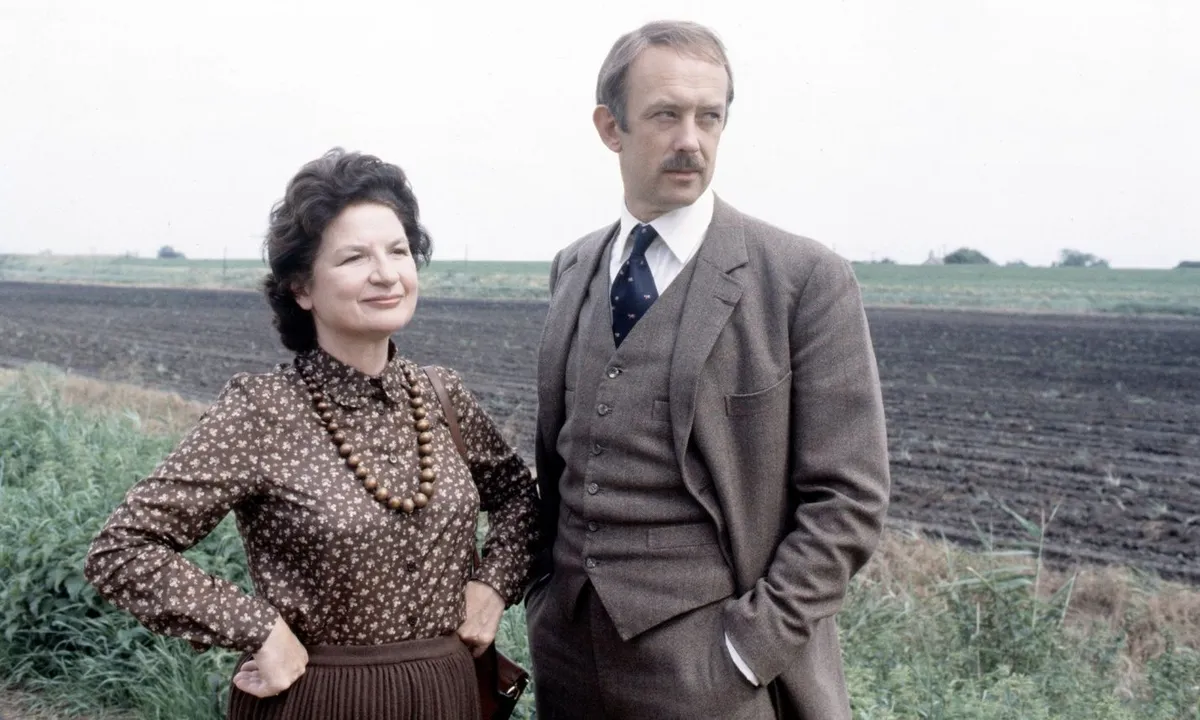 P.D. James and Roy Marsden, who played Dalgliesh in the 80s-90s even though I prefer Bertie Carvel's portrayal. #NotMyDalgliesh
I've been meaning to write more about Adam Dalgliesh, since reading the entire series took me more than half a year and I got very absorbed in James' atmosphere and worldview. James was a devout Anglican and Dalgliesh is the son of a country vicar. While he does not actively practice his faith, it's always lurking in the background. I would not call the Dalgliesh books cozy, exactly. They get really dark and sordid, and one of the most compelling parts of Dalgiesh as a character is that he is often checking his own disgust responses to the people and things around him. He, as a voicebox for James, has an unflagging commitment to upholding human dignity, but he is very unsentimental.
In the fifth book, The Black Tower, Dalgliesh gets roped into a mystery at a remote live-in home for the disabled. It's clear that nothing about the place or the people are things he would willingly choose to be around. One of the most self-indulgent entries in the series - which I ultimately found moving - Death in Holy Orders - sees AD (as his subordinates refer to him) investigating multiple deaths at a country seminary he visited as a child. Throughout that book, his placid disposition is shaken by a visceral, almost childish anger that a place with such pure memories for him has been sullied:
It wasn't only that [CULPRIT] had desecrated a place in which he had been happy; he asked himself bitterly what sanctifying grace was bestowed on St. Anselm's by the mere fact of Adam Dalgliesh's happiness.
The entire series ends with AD, who has used his decades long status as a widower to preserve his solitude, remarried, and the rest of the characters more or less poised to find contentment. James was clearly distraught at how much the England she grew up in changed over the years, and it bleeds into the books more and more as the series goes on. It's probably a weakness, but like so many things I found it interesting and endearing to see so much of the author. Still, her final message is that individuals can always uphold the values she thinks makes a good society.
But I'm very sad a lot of the time. I am always playing whack-a-mole with lifelong depression that never goes away, just waxes and wanes in severity. Since my oldest brother died in 2022, it feels like the arc of my life and my family's story has crossed some terrible threshold into a season of grief that shows no signs of ending. Sometimes very bad things happen, and then sometimes more bad things happen. People lose loved ones - multiple loved ones! A conviction of the value of life and human dignity doesn't save you from arbitrary misfortune. Growing up protestant never saved me from anything, and converting to Catholicism, while it may comfort me and steady me, will not actually stop things from happening. This is where my Blindsight of late comes in.
If James is overly attached to simple patriotism for the England she grew up in, John Banville is here to crush all your romantic dreams of Ireland. I wouldn't be surprised if some readers came to Quirke because they ran out of Tana French's Dublin Murder Squad books and frantically searched, like, "dark irish murder mysteries" or "literary irish crime fiction." I am also a French fan, but there is still an emerald sheen to even her most twisted entries (Broken Harbor IMHO). Granted, Quirke lives in mid century Dublin and French's detectives are our contemporaries, so some of the pall over Ireland in the Quirke novels is cast by WWII. (but the Dalgliesh books, which end in the mid 2000s, will show you how willing some writers are to stretch WWII being the cause of something...) I think most Americans think of Ireland as charmingly shabby, Dublin as a little ramshackle in a cozy and bookish way. Quirke's Dublin is a claustrophobic, putrid place. It's either cold and damp or too hot, a nice day only rarely peeking through the oppressive atmosphere. The Church and the upper class are maladjusted and perverted. Nobody enjoys their food. Characters are always undereating or ordering sad, limp dishes and then losing their appetite.
I read the series out of order. It was actually the first book in his sequel? midquel? Quirke & Strafford novels that got me. There are seven Quirke books written under Banville's crime pseudonym Benjamin Black. Later, he dropped Black and wrote four Q&S books under his own name. In these books, Dublin pathologist and Catholic-by-default but functionally atheist Quirke is joined by St. John Strafford, a detective from the protestant gentry. These books take place in the 50s, and it was very rare for there to be a prot on the force. The result is very funny. Characters are always just openly hating Strafford on sight. A running gag is that his last name sounds a lot like the Catholic-coded name Stafford so he's always getting called the wrong thing. Add his terrible first name (pronounced "sinjun") and this guy is always getting shoved in a figurative locker. Though I'm much more attached to Quirke, the first Q&S book only features Strafford so I met him first. Whereas Quirke is a lumbering, cursedly horny alcoholic, Strafford is wanly temperate. Finding himself in a house reminiscent of the cold, stately manor he grew up in, he thinks:
Yes, he should have been a lawyer. He wasn't cut out to be a policeman. Too late now to change. He felt at once ridiculously young, a sort of monstrous child, and at the same time hopeless old.
On meeting the neurotic lady of the house:
She wasn't beautiful, Strafford thought, but all the same something in her frail, melancholy looks pressed a deep bell within him that made a soundless, sad little ping.
Quirke comes across as a character who, somewhere deep in his original code, knows how to enjoy life but was beaten down at every turn. The reserved and bloodless Strafford exists too lightly on this earth, makes himself so faint, that enjoyment seems like it couldn't touch him.
The Q&S books are, like everything I've read from Banville, stunning, and form an interesting portrait of two thwarted, unhappy men who are trying to have some kind of moral compass in a hostile, unjust world. The fourth - and seemingly last - ends with nobody happy and a major character dead, but with some hope of romantic redemption for Quirke. But so did his solo series, and it went tragically wrong.
Long story short I then read the rest of the series backwards. Well actually I read Q&S 1-4, Quirke 4-7, 3, 2, 1. I was avoiding the first book, Christine Falls, because I knew it contained infant death and being a mother has made me a giant puddle about that. I made a deal with myself that if by the end of 2, The Silver Swan, I felt that the books were irresistible, I would gut out Christine Falls. They were! Unlike Dalgliesh, where I can confidently recommend a few favorites, I can't pick a favorite of these 11 books. None of them end with the culprit straightforwardly brought to justice. There's extralegal revenge, suicide, and accidental death, but the end of most the novels is "you can't really mess with anyone protected by the Catholic Church."
Quirke's backstory is a depressing foil to a protagonist like Dalgliesh. AD is the beloved only child of loving, Anglican parents. I don't think P.D. James was ever taught the concept of "gap moe" but the tall, dark Dalgliesh exemplifies it. In book 7, Devices and Desires, he comes across a body while splashing in the shallows, indulging in reveries of his seaside childhood. When a local police officer asks him what he was doing on the headland: "'Walking, thinking.' He was about to add: 'And paddling like a boy,' but checked himself." AD moves through the world with advantages of looks, intelligence, and security, and is able to keep his inner child to himself, protected. Quirke, an orphan raised in a brutal industrial school before getting adopted by a powerful judge, also carries his childhood self wherever he goes. He is tall, like Dalgliesh, and many women are attracted to him, but he is often described as a sort of hulking, out of place presence, like the damaged boy inside of him can't be hidden or ignored:
For there was another version of him, a personality within a personality, malcontent, vindictive, ever ready to provoke, to which he gave the name 'Carricklea.' Often he found himself standing back, seemingly helpless to intervene, as this other he inside him set about fomenting some new enormity. Carricklea could not be doing with mere happiness or the hint of it.
This kind of petulant, self-sabotaging streak does not exist in Dalgliesh, the character. There are flaws reserved for side characters and suspects: "But if Stephen wanted to indulge in remorse there was little to be gained by stopping him. He usually felt better afterwards, even if other people felt worse." It's another example of the staggering idealism of the Dalgliesh series - that a higher up in law enforcement is not only as smart, gentile, and competent as AD, but has so thoroughly restrained his personal demons; that justice will not only be done, but done with utmost decorum. One fleeting moment of bitterness comes in book 6, Death of an Expert Witness, when Dalgliesh observes his subordinate, Massingham, put aside his hotheaded demeanor to entertain a suspect's children. Watching his ease with a toddler boy, AD thinks to himself that he never wants to see or work with Massingham again. Having lost his wife and child, he is unfamiliar with the world of children and resents the pain this scene has caused him. But such reveries, when they happen, don't overtake AD as they would Quirke.
Loss is the place where Dalgliesh and Quirke's stories converge. The death of a young wife defines each character, to very different ends. For AD, he lost a child terribly and permanently. For Quirke, he passed his daughter off as his niece for the first 20 years of her life. Much of the Quirke novels have to do with how he and his daughter, Phoebe, grope and struggle towards something like a real parent-child relationship. Phoebe is a great character, and one who gets better and more interestingly written as the series goes along. I got the sense Banville wrote her initially to service Quirke's arc and got more attached to her as time went on. Even so, her very presence adds to his grief and guilt. He is not afforded the sad freedom and solitude that AD's situation gave him.
Both characters get remarried - Dalgliesh in the last book, Quirke in the last solo book. Dalgliesh's love interest, Emma, is younger, a don at Cambridge, and often described as being burdened with a "grave beauty." It would be ridiculous but after following and loving AD for about 11 books at the point he meets her, it's forgivable to give this noble, sad man a dream girl. Quirke's second wife, psychoanalyst and Holocaust refugee Evelyn Blake, is an odd character. She is described as heavyset with a bad haircut, though with a penetrating gaze and huge eyes. She is clearly meant to be a contrast to the wispy and glamorous women Quirke is always finding himself in bed with. He is shocked by her presence and humbled to be offered love. We get one Q&S book with her before it all goes wrong.
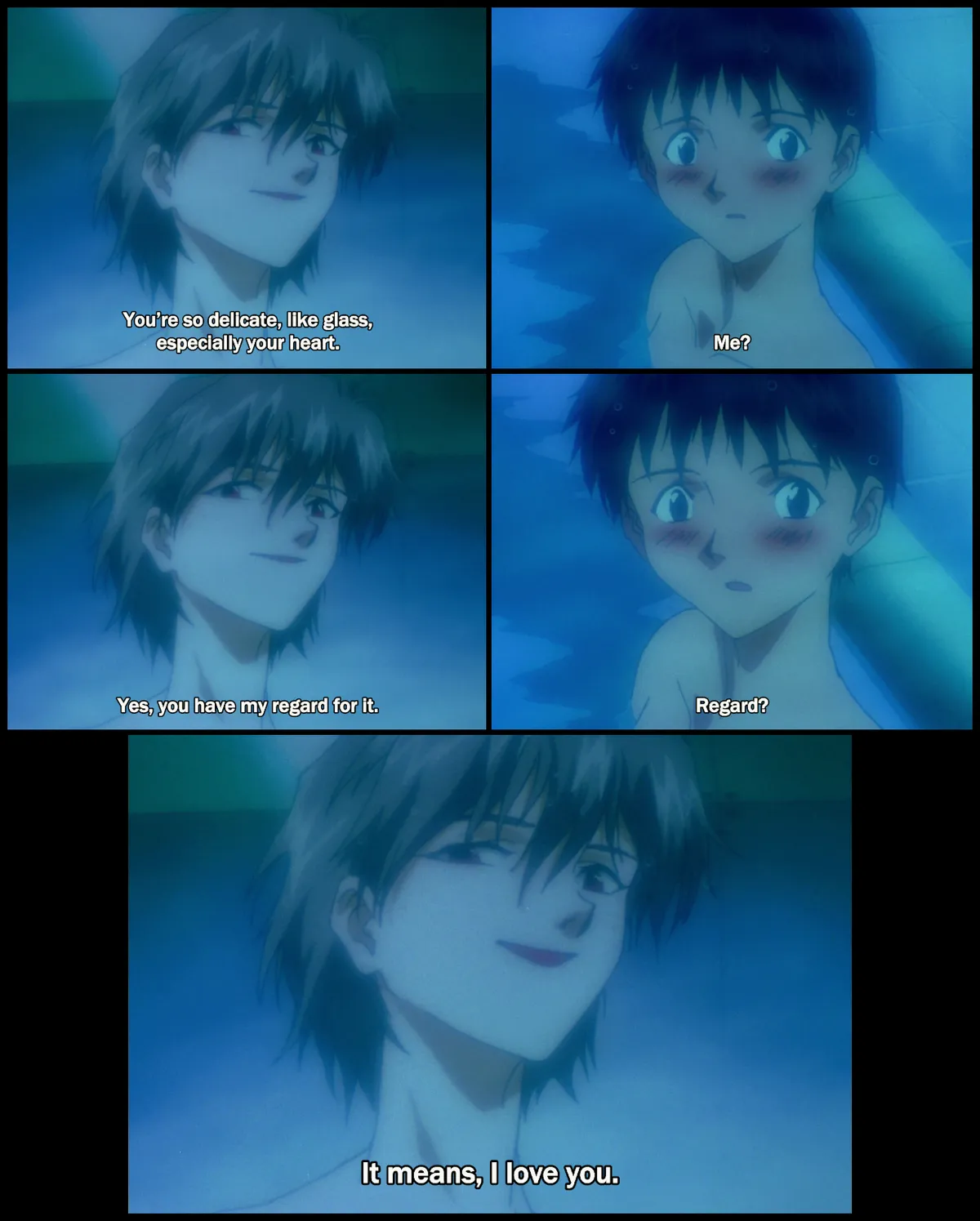
That book, April in Spain, at times is almost too good of a character study. Spoilers if you care At the end of the book, Evelyn is killed by a stray bullet from the hitman who has found himself stalking our main characters in Spain. I understand why Banville had to do it to em' though. Evelyn swept into the last solo Quirke book, Even The Dead, almost like Kaworu Nagisa, rocking Quirke's grey and complacent world with her miraculous patience, perception, and love. Like Kaworu, she had to go. She had Quirke too figured out, and for the continuation of the series, Banville had to summon his own Carricklea to destroy it. For one book, though, it's lovely to see him through the eyes of an affectionate but wise companion.
We don't need such a device for Dalgliesh. Even though she gets some POV, his eventual second wife, Emma, does not show us anything we don't already know about the noble AD. His fundamental goodness is seen and remarked upon by other main and side characters alike, but more than that it's the water P.D. James is swimming in when she writes him. An introduction to one of the books has a note from James in which she clarifies that she is not in love with her character, but tried to imbue him the qualities she admires most in both men and women.
It's not that Quirke and his associates don't have admirable qualities - they do, to a touching degree! Phoebe especially, who is wary and traumatized like her father, always rises to the occasion to help someone in need, often dragging herself and Quirke into danger. Quirke's sometimes partner Inspector Hackett is unusually open-minded for an Irish Catholic in the 1950s. Quirke himself, with his wounded little boy spirit, harms from the desire to help just as often as from thoughtlessness. But none of these characters and their better angels make up a "small acts of kindness will save the world" vibe, lol. It's more of an "I'm going to keep drinking that garbage*" because they can't help themselves.
*the indomitable human spirit
The following passage is from a Quirke novel, but I realized it could also pass for Dalgliesh:
One had to make do with life's building blocks, the unasked-for gift that couldn't be brought back to the shop and exchanged for something better.
I don't actually think the world is an arbitrary, Godless place, but Quirke's world is, and its characters keep throwing everything at the wall of it anyway. Sometimes they catch a break, but sometimes bad things happen to them, and then more bad things happen. Bad things happen to evil people (usually not through legitimate avenues), but bad things also happen randomly to good people, or to characters you hope have finally turned the corner out of their own darkness. It makes the series hard to recommend to friends and family, because many readers - understandably - don't want to be bummed out to that degree even if the writing is beautiful. For me, I find them strangely comforting.